How should you start and end a work email in the UK?
Copy the formality of the person writing to you. When there is nothing to copy, start a notch more formal than feels natural.
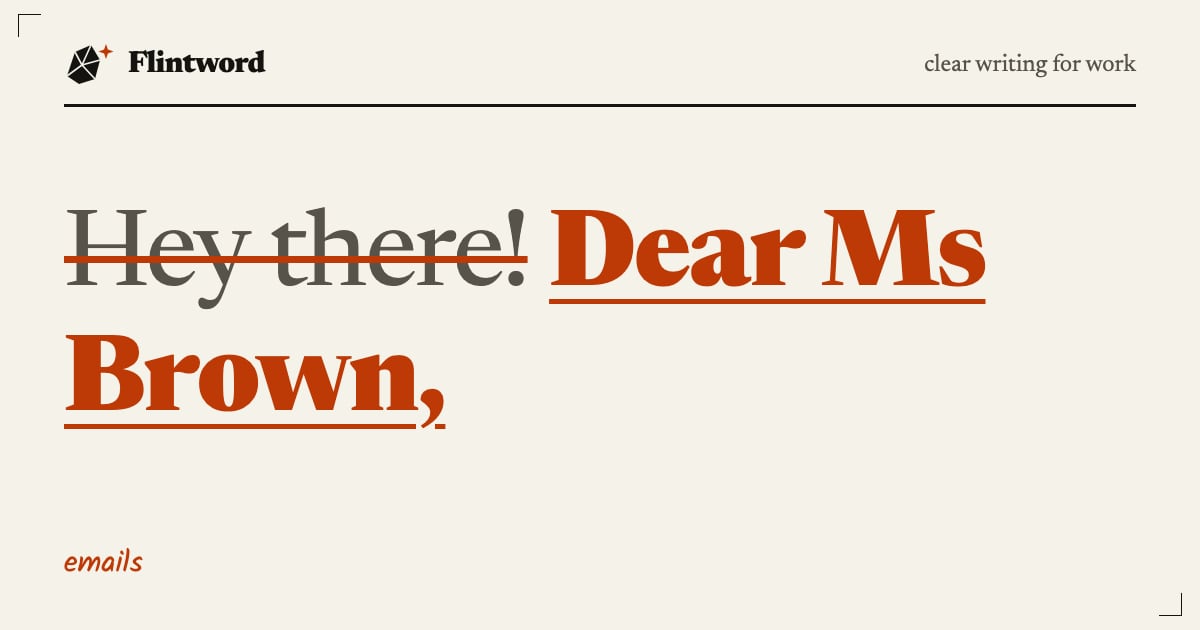
For someone you know, use ‘Hi’ or ‘Dear’ with their first name, and end with ‘Best wishes’ or ‘Kind regards’. For a first approach to someone more senior or a formal matter, use ‘Dear Ms Brown’ and end with ‘Yours sincerely’ or ‘Kind regards’. When someone has written to you, match how they did it.
No law governs this, of course. Debrett’s says the strict rules of letter writing do not really apply to email, and that the safest course is to match the tone and formality of the messages you receive. Most of what follows spells out that idea for the situations where you have nothing to match.
A table to keep by your desk
| Situation | Open with | Close with |
|---|---|---|
| Official or legal matter, name unknown | Dear Sir or Madam | Yours faithfully |
| Official or formal, name known | Dear Mr Patel | Yours sincerely |
| First contact with a senior or outside person | Dear Ms Brown | Yours sincerely, or Kind regards |
| Client or contact you have met | Dear Sam | Kind regards, or Best wishes |
| Colleague, day-to-day | Hi Sam | Best wishes, or Thanks |
| Close colleague, good news | Hi Sam | Cheers |
The rows are our reading of Debrett’s guidance and normal British office practice. Your workplace may sit higher or lower on the scale, and if it does, follow it.
Faithfully or sincerely
This one does have a rule, and it comes from letter writing. Debrett’s states it simply: ‘Dear Sir’ is matched with ‘Yours faithfully’, and ‘Dear Mr Rivers’ or ‘Dear Ms Emerson’ with ‘Yours sincerely’. A name means sincerely, and no name means faithfully.
Debrett’s places these at the most formal end of email, used these days mainly for official business. It also suggests defaulting to them when you start a correspondence with a business contact you have never met, especially someone senior. In practice, many people now use ‘Kind regards’ for that kind of first message, and few readers will mind. A formal complaint, a legal letter sent by email or a resignation is a good time to use the full form.
When you do not have a name
Look for one first. Debrett’s says ‘Dear Sir or Madam’ is quite appropriate, while noting that it would be better to find the name. A website, an email signature or a quick phone call often supplies it. If the post is what matters, the role can serve: ‘Dear Accounts team’ is friendlier than ‘Sir or Madam’ and more honest about who will read it.
Avoid the alternatives that show you did not look. Debrett’s observes that ‘Greetings’ suggests a large mailing list, and that ‘Hey there!’ implies you do not know the name but hope to get away with it.
First names and titles
Using first names is increasingly common in business once you know the person, Debrett’s notes, while a formal transaction with a solicitor or accountant may call for ‘Mr’ or ‘Ms’. The University of Southampton’s guide, written for students, advises title and surname until you have been told a first name is fine. That is a sensible starting point for anyone writing up a hierarchy.
A few details are worth getting right:
- Use ‘Ms’ when you do not know which title a woman prefers, unless she has signed herself otherwise.
- Use the title they use for themselves, including ‘Dr’ or ‘Professor’.
- Check how they spell their name. Their own signature is the best authority, and copying it is quick.
- Once they sign with a first name, you can usually use it in your reply.
What each sign-off says
Most people choose from a handful of closings, and each carries a slightly different note.
- Kind regards
- The safe formal choice. Debrett’s says ‘regards’ alone is fairly ceremonious, and that ‘kind’ softens it.
- Best wishes
- Friendly and neutral. Debrett’s calls it bland and unlikely to offend, which at work is a compliment.
- Many thanks
- For when you have asked for or received a favour. Debrett’s warns that it reads as passive-aggressive at the end of a nagging message, and it is right.
- Cheers
- Fine with people you know well, as long as the message is cheerful. Do not use it for bad news or for someone senior you have not worked with.
- KR, BW
- Debrett’s dislikes these abbreviations, because they suggest you are too busy to be polite. We agree.
- Nothing at all
- Reads as abrupt, unless you are in a fast exchange with someone you know. A long thread on one topic can reasonably drop the formalities after the first few messages.
Serious messages need a higher register
‘Hi’ suits daily business. Debrett’s says it seems out of place when the subject is serious, and gives the examples of a pay-rise request, a redundancy notice or a customer complaint. The same applies to the sign-off. Here is a sensitive message edited to fit its subject:
| Edit | Reason |
|---|---|
| The exclamation mark sets the wrong mood for what follows. | |
| Give the reason and the time. Nobody relaxes after “we need to chat”. | |
| Keep the closing as serious as the opening. |
The lines around the greeting
A correct greeting will not rescue a muddled message. Southampton’s guide recommends a meaningful subject line, and clear, polite, short writing. It also has a good warning: treat an email like a postcard, because once you send it, you have no control over where it goes.
In the body, start with what you want from the reader, as you would at the top of a report summary. Keep to everyday words and short sentences. And before you press send, check the spelling of their name, which is the one word they are certain to read closely. Our proofreading guide has a ten-minute routine for messages that matter.